Skip to content
Prathom 1–6 · ป.1–ป.6

Primary Tutoring in Thailand That Follows the School Year, Band by Band

Primary tutoring in Thailand works when the tutor fits the grade band a pupil is standing in. Six years of Prathom hold three very different children: one still decoding Thai script, one reading for meaning and meeting the first national assessment, one sitting O-NET and choosing where to try for an M1 place. A tutor is matched to that band, and to the calendar it runs on.

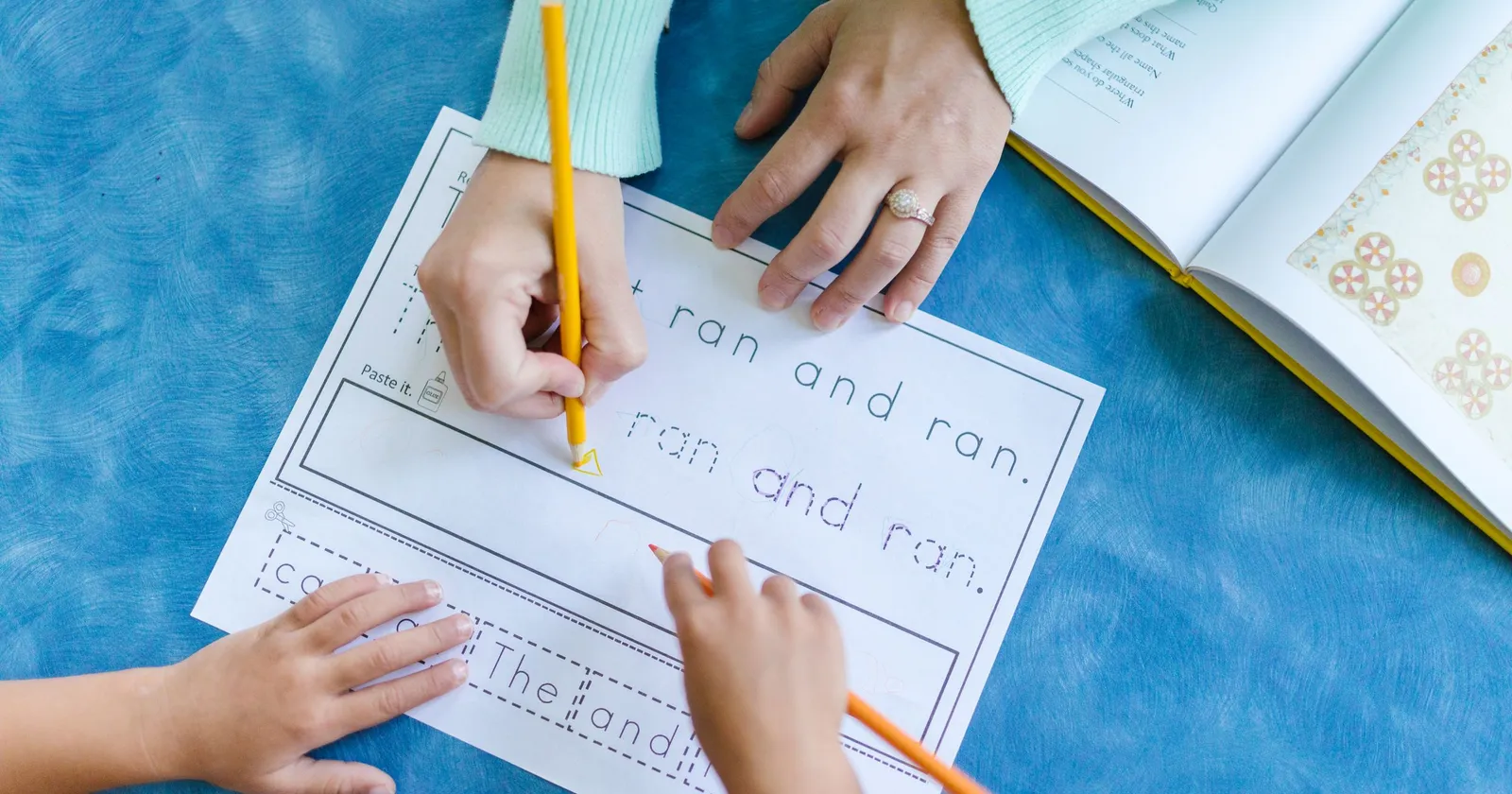
An adult's hand beside a child's as the child traces English words on a worksheet

4.9/5from 443 learner reviews of this programme

Program Definition

What is
Primary tutoring (Prathomsuksa 1–6)?

Primary tutoring in Thailand covers Prathomsuksa 1 to 6, the first six of the country's nine compulsory school years. Sessions run on the national calendar that opens in mid-May, inside the eight learning areas of the 2551 core curriculum, and around the checkpoints a primary child meets: RT in P1, NT in P3, O-NET in P6.

Key Points

  • Prathom 1 to Prathom 6 on the national ladder, ages six to roughly twelve, written ป.1 to ป.6 on every report card and school document a pupil carries.
  • On paper the schools still work from the 2551 core curriculum, whose standards were revised in 2560 and adjusted once more in 2566.
  • Three assessments sit inside these six years: RT reading in P1 and NT in P3, both run by OBEC's testing bureau, and O-NET in P6, run by NIETS.
  • Academic year 2569 runs 16 May to 30 September for Term 1, then 1 November onward for Term 2, with the long break falling between 1 April and 15 May 2570.
  • Primary is also where a child can still cross between the national ladder and an international one without a wasted year, because the two calendars only diverge by a few months at this age.
Format Options

Three ways a primary session can be arranged

A seven-year-old and a twelve-year-old need different room, different hours and different company. Pick the shape first, then the subject.

  1. Duration: Meetings are booked as sessions, with a minimum length so that one journey across Bangkok is worth making

    Tutor comes to your home

    The usual arrangement for Prathom. A young child works better at their own table, with their own school books open and a parent close enough to hear, though not sitting in on it.

    • A tutor is chosen off the train line your home already sits on, because a primary child's bedtime is what really caps a weekday slot and the ride is what eats into it
    • The working material is the child's own exercise books and the school's own worksheets, so nothing extra has to be carried anywhere
    • A P1 to P3 session is broken into shorter blocks of attention, on the honest assumption that a small child's concentration comes and goes
    • The written note goes to the parent at the end of the same meeting, while the session is still fresh
  2. Duration: Booked by the session, on the same calendar as in-person meetings

    Online, with a camera on the page

    Built for pupils outside Bangkok and for weeks when the child cannot travel. The camera points at the exercise book, which puts the child's working in front of the tutor for the whole session.

    • Suited to P4 upward, where a child can hold attention on a screen for a full working block
    • The tutor can see the step where the working broke, because the page stays in view the whole time
    • Reaches Chiang Mai, Phuket, Chonburi, Khon Kaen and any province where the right primary tutor does not live locally
    • Sessions are scheduled on Asia/Bangkok time and on the national school calendar, including the October break
  3. Duration: Same session length as a one-to-one meeting, timed to suit both pupils' timetables

    Two children at the same grade

    Siblings a year apart, or two classmates from the same ห้องเรียน. It works when both children are on the same chapter and neither is far ahead.

    • Capped so that every child still reads aloud or works a problem at the board in every meeting
    • Each child's parent receives their own written note, because two children never lose the mark in the same place
    • Useful for P5 and P6 O-NET practice, where working a paper alongside someone is closer to the real room
    • Declined outright when the two children are more than one chapter apart, because one of them will be carried

Six years, three bands, three different jobs

The word 'primary' hides how much changes between P1 and P6. A tutor who teaches all six the same way is teaching none of them.

P1–P2 · ป.1–ป.2
Learning to read Thai at all

Thai runs its words together without spaces, and a vowel can be written in front of its consonant, behind it, over it or under it. The first two years go into turning an unbroken line of script into words the child can say out loud. The RT reading assessment lands at the end of P1 for exactly this reason.

Subjects:

ภาษาไทย reading and spellingคณิตศาสตร์ number senseEnglish sounds and letters

Focus Areas:

  • แจกลูกสะกดคำ: blending a syllable out loud before reading it silently
  • มาตราตัวสะกด: hearing which final-consonant group a word belongs to
  • Counting, place value and the first addition and subtraction without regrouping
  • Holding a pencil and a line of writing for a full page
P3–P4 · ป.3–ป.4
From decoding to meaning, and the first national checkpoint

The child stops sounding words out and starts reading to find something. NT arrives at the end of P3 and measures Thai and mathematics together, which is the first time a primary pupil's work is judged outside their own school. P4 is also the year the competency-based trial now reaches.

Subjects:

ภาษาไทย comprehensionคณิตศาสตร์ multiplication and divisionวิทยาศาสตร์และเทคโนโลยีสังคมศึกษา

Focus Areas:

  • Reading a passage and answering about something the passage did not say outright
  • Times tables held well enough that they stop competing for attention inside a longer problem
  • The tone rules: อักษรกลาง, อักษรสูง and อักษรต่ำ behaving differently under the same tone mark
  • Writing an answer in full sentences, the way the paper expects it
P5–P6 · ป.5–ป.6
O-NET, and the decision about M1

Fractions, decimals and multi-step word problems arrive close together, and the arithmetic stops being the hard part. At the end of P6 the child sits O-NET across four subjects, and the M1 schools to try for have already had to be chosen, usually while Term 2 is still running.

Subjects:

ภาษาไทย including the written-answer sectionคณิตศาสตร์ fractions and decimalsวิทยาศาสตร์ภาษาอังกฤษ

Focus Areas:

  • Reading a Thai word problem and deciding what is being asked before touching a number
  • Working a full-length paper by hand, on paper, with an answer sheet to shade
  • The written-answer part of the Thai paper, which cannot be guessed at
  • Sitting a secondary entrance paper written in a style no primary worksheet uses
Learning Content

What we teach inside the 2551 core curriculum

Eight กลุ่มสาระการเรียนรู้ make up everything a Thai primary child is taught, under the core curriculum of 2551. Five of the eight are where a tutor genuinely helps; the other three belong to the school day.

The three areas we do not tutor are สุขศึกษาและพลศึกษา, ศิลปะ and การงานอาชีพ. They are assessed inside the school and they are taught with equipment, a field or a kitchen. A private tutor adds nothing there, and saying so is cheaper for you than finding out after four sessions.

  • ภาษาไทย · Thai Language

    The heaviest subject in primary and the one that decides how every other subject reads. Work runs from blending syllables aloud in P1 to the written-answer section of the P6 paper.

    Topics

    • แจกลูกสะกดคำ and the vowel forms that surround a consonant
    • มาตราตัวสะกด, the eight final-consonant groups
    • ผันวรรณยุกต์: why the same tone mark gives a different tone on อักษรสูง and อักษรต่ำ
    • คำควบกล้ำ and อักษรนำ, the two places a confident reader still stumbles
    • Reading comprehension: finding what the passage implies
    • +1 more
  • คณิตศาสตร์ · Mathematics

    Primary maths in Thailand is taught in a strict order, and a gap in one year quietly closes the door on the next. We diagnose backwards from where the child is stuck.

    Topics

    • Place value, then addition and subtraction with regrouping
    • Times tables to the point where they no longer take attention
    • Fractions: naming, comparing, then adding with unlike denominators
    • Decimals, and seeing that 0.5 and one half are the same number
    • Area, perimeter and volume with the units the paper actually asks for
    • +1 more
  • วิทยาศาสตร์และเทคโนโลยี · Science and Technology

    Primary science is mostly observing, naming and explaining in writing. Most lost marks are language marks wearing a science coat.

    Topics

    • Living things, their parts and what each part does
    • Matter and its states, and the words Thai uses for each change
    • Force, motion and simple machines at primary depth
    • Earth, weather and the solar system
    • Reading a table or a simple graph and saying what it shows
    • +1 more
  • สังคมศึกษา ศาสนาและวัฒนธรรม · Social Studies

    Four strands under one subject name: religion and morals, civics, economics, and history with geography. Primary pupils are asked to remember a great deal and to say why it mattered.

    Topics

    • Buddhist teaching as it is examined in school, with respect for pupils of other faiths
    • Citizenship, rules and how a Thai community is organised
    • Household economics at primary level: saving, spending, choosing
    • Thai history and the geography of the provinces
    • Map reading and the vocabulary that goes with it
    • +1 more
  • ภาษาต่างประเทศ · English

    English is one of the four subjects tested at P6. At primary the useful work is sound, sight vocabulary and the confidence to say a sentence out loud without translating it first.

    Topics

    • Letter sounds and blending, so reading does not depend on memorised shapes
    • Everyday vocabulary tied to what the child can already name in Thai
    • Simple sentence patterns used aloud before they are written
    • Listening for the answer, and letting the unknown words go past
    • The question types the P6 English paper actually uses
    • +1 more
  • EP, MEP and bilingual streams

    State schools run English Program, Mini English Program, Integrated English Program and bilingual streams. A child in one of these learns a concept in English and is assessed on it in Thai, which is a specific and fixable problem.

    Topics

    • Building the Thai term and the English term for the same concept at the same time
    • Maths vocabulary: numerator and เศษ, denominator and ส่วน, side by side
    • Science terms in both languages before the chapter test
    • Catching a child who understands the idea and loses the mark on the word
    • Keeping Thai reading strong while the school day runs in English
    • +1 more
Who It Is For

Who asks us for a primary tutor

Four kinds of pupil, four different reasons, and the first session looks different in each.

The Thai-medium primary pupil

A pupil at a state or private primary on the national curriculum, with a gap in one subject that has started to show in class marks and needs closing before the next school year opens in May.

Recommended:

ภาษาไทยคณิตศาสตร์Weekday eveningTutor comes home

The EP or MEP pupil

Child in an English Program stream at a state school. The lessons are in English, the national assessments are in Thai, and nobody has been keeping both vocabularies in step.

Recommended:

Bilingual subject vocabularyThai reading upkeepEnglishWeekend

The pupil crossing between ladders

Moving a primary-age child between a national school and an international one, in either direction. The gap to close is a language of instruction and a school calendar, and both close with steady work.

Recommended:

Thai for a returning childEnglish for a joining childCalendar planningIntensive block

The P6 pupil

One year left. O-NET in January and an M1 entrance sitting to prepare for, with a decision about which schools to try for that has to be made while Term 2 is still running.

Recommended:

Full-length paper practiceThai written answersM1 entrance styleTwice weekly
Featured

What reaches you after a primary session

A seven-year-old cannot tell you what happened in the lesson. For the P1 to P3 years the written note is the only window a parent has, so it is specific or it is worthless.

What the Note Covers

The words that were read unaided

For P1 to P3, the note lists what the child decoded without help and which vowel form or final-consonant group still stopped them. Next week the list is compared, which makes progress something you can see for yourself.

The step where the working broke

For maths we photograph or copy out the line at which the answer went wrong, and name the step. 'Struggles with fractions' tells a parent nothing; 'converts the denominator, then forgets to convert the numerator' tells you exactly what next week is for.

What to do at home this week, in ten minutes

One small task the pupil repeats at home, with someone nearby to listen: read a page aloud, explain one problem back, recheck one page of homework for the same error. Primary progress is made of short repeated things.

Where the child stands against the school's own chapter

The note names the chapter the class is on and whether the child is level with it, behind it or ahead. That keeps tutoring tied to the school's pace.

What the primary years actually contain

Five things in the Prathom years that quietly cost a pupil a term

None of these are secrets. They simply tend to surface when the term is already half gone and the pupil has lost weeks to them.

A pupil's classroom and the P6 exam may be running different curricula this year

Why it happens

สพฐ. has widened its competency-based curriculum trial, หลักสูตรฐานสมรรถนะ, to take in ป.4, ป.5 and ป.6 during term one of 2569. That extends a trial already running in kindergarten and ป.1 to ป.3 at 4,383 schools. Joining is a school's own choice, and the 2551 core curriculum is still the one on the books, so two schools on the same road can teach the same grade inside two different frames while the national assessment is set from 2551 regardless.

How we fix it

We ask which frame the school is using before the first session, and we do both jobs at once: the 2551 material that the P6 paper is set from, taught in whichever framing the child's classroom is already using. A child should never have to translate between the two on their own.

P6 still sits O-NET on paper, while the older grades have moved to a screen

Why it happens

NIETS runs O-NET at P6, M3 and M6. M3 and M6 have moved to Digital Testing; P6 has not. A child who has rehearsed only on a tablet meets a printed booklet, a separate answer sheet to shade and a Thai section that has to be written by hand, on the day itself. The knowledge is there and the format eats the time.

How we fix it

The last stretch of preparation is done the way the day will be done: printed papers, full length, an answer sheet, and the written-answer section put down on paper in the child's own handwriting.

O-NET is voluntary, though it is widely spoken of as compulsory

Why it happens

O-NET became voluntary from academic year 2563, under the ministry announcement of 25 December 2563, and the university council removed it from TCAS selection from TCAS65. It is a signal about how a school is doing and a rehearsal for how Thai exams are written. It decides nothing about a university place six years later.

How we fix it

We say that plainly at the start, then set a goal that matches what the paper is actually for: a P6 who can read a Thai question carefully, manage a timed paper and write a full answer by hand. Those three habits outlive the score.

The marks go missing in the reading of the problem

Why it happens

In the upper primary years the maths syllabus moves from whole-number arithmetic into fractions and decimals, and word problems stop being a single step. A child who can add two fractions on a clean line can still lose the whole question, because the Thai sentence had to be turned into arithmetic first and there was no mark for getting the arithmetic right afterwards.

How we fix it

We mark the step, and let the answer follow from it. The child is asked to say, out loud and before writing anything, what the question wants. Only when that sentence is right does the pencil move, which is also how the written-answer section is scored.

Crossing between the national and international ladders costs a term if it is timed badly

Why it happens

Term dates decide this. A national primary year is bracketed by mid-May at one end and March at the other, whereas an international school in Bangkok opens around August and breaks up in June. A primary child moving one way waits out a stretch of months; moving the other way they join a class part-way through its year. The gap is a calendar problem, and it is at its smallest during the primary years.

How we fix it

We plan the crossing against both calendars before the move, and use the gap for the thing that will actually be missing on arrival: Thai reading for a child coming back, English for a child going across. A planned gap is a head start; an unplanned one is a lost term.

Our Standards

Six commitments every P1 to P6 pupil can count on

Each line below is a promise about how the work is run, and one month of sessions is enough for you to hold every one of them up against what actually happened.

  • One tutor through the whole grade band

    A primary child spends the first two sessions deciding whether to talk to an adult at all. Changing the adult resets that. The same tutor stays through the grade band unless you ask for a change.

  • A written note after every session

    Named words, the exact step where the working broke, and one ten-minute task for the week. For the parent of a P1 pupil it is the only window into the lesson, so it is written while the child is still in the room.

  • A wrong match is replaced at no charge

    Some children and some tutors simply do not work. Tell us and a replacement is arranged without an argument and without a fee, because the alternative is a child quietly giving up on tutoring altogether.

  • The figure in writing, before anybody knocks

    What it costs, what that covers and what would move it, all sent to you before a tutor ever stands at your door. The travelling is already inside the price of a meeting.

  • Scheduling that respects the Thai calendar

    Sessions are planned around 16 May to 30 September, the October break, the term that opens on 1 November, and the long break from 1 April. A schedule built on any other year belongs to a different country.

  • We say when tutoring is the wrong answer

    Three of the eight learning areas need a field, a kitchen or a studio, and a private tutor adds nothing to them. If what the pupil needs is an eye test, a quieter room or more sleep, we say so in the first week.

Meet the Tutors

How a primary tutor is chosen

The screening below was written for this grade band and no other, and every primary tutor passes it.

Asked to teach one row of the ผันวรรณยุกต์ table to an imagined P2, out loud, in the interview itself. Knowing the rule and being able to hand it to a seven-year-old are separate skills.
Asked how they would show a P5 that 0.5 and one half are the same number, without using the word 'equivalent' and without writing a rule on the page.
Has themselves sat, or has taught to, the P6 O-NET papers in Thai, mathematics, science and English, and can say what each paper's written-answer or long-answer section rewards.
Can explain a primary maths concept in Thai and in English for pupils in EP, MEP or bilingual streams, holding both terms at once.
Has a plan for a P1 session that expects attention to run out and come back.
Understands that the note to the parent is part of the session, and writes it while the child is still in the room.

Where primary sessions happen

Online Tutoring

Online Worldwide

Online suits P4 upward, where a child can hold a full working block on a screen. The camera is pointed at the exercise book, which puts the working in front of the tutor for the whole session and leaves the child free to think without being watched. It is how we reach pupils in provinces where the right primary tutor does not happen to live.

  • Scheduled on the national school calendar, including the October break
  • Sessions after school on weekdays, or in the morning at weekends
  • The same written note to the parent as an in-person meeting
  • Chiang Mai, Phuket, Chonburi, Khon Kaen and every province in between

In-Person Tutoring

A tutor travels to your table. The khet we are asked about most often run along the Sukhumvit stretch through Watthana and out towards Bang Na; down the Sathon, Bang Rak and Bang Kho Laem side of the river; inland at Huai Khwang; east at Saphan Sung; and north at Don Mueang. Pathum Thani, Nonthaburi and Samut Prakan are served too. We pair on train lines, and for a primary child that matters twice over: the ride caps how late a session can start, and a child who is already tired at seven o'clock learns nothing at eight.

FAQ

Questions asked about the primary years

Short answers, and where a date or a rule is involved, the source it comes from.

When during the school year should we start?
Academic year 2569 runs its first term from 16 May to 30 September, breaks through October, and opens its second term on 1 November. Starting near the beginning of a term is easiest, because the tutor can move with the class. The October break and the long break from 1 April to 15 May 2570 are the two windows where a gap from an earlier year can be closed without the school day competing for the same hours.
What exactly is NT, and does it affect a pupil's future?
NT is the pupil quality assessment run by OBEC's testing bureau at P3, and it measures Thai and mathematics. It is a picture of where the child and the school stand at the halfway point of primary. It is not an entrance test and it does not follow the child anywhere. The useful thing about it is the timing: it arrives just as reading is supposed to have turned into comprehension, so a weak result arrives early enough to be useful, and it is nobody's verdict.
Which subjects does O-NET at P6 cover?
Four: Thai, mathematics, science and English. The Thai paper carries a written-answer section alongside its multiple-choice part, which is the part children are least rehearsed for, because almost no weekly worksheet asks a primary child to write a full answer under time. That is where the last month of preparation earns the most.
For a pupil in an EP or MEP stream, should the tutoring be in English or Thai?
Both, deliberately. State schools run English Program, Mini English Program, Integrated English Program and bilingual streams, and the pattern we plan for is the same in all of them: the concept arrives in English and the national assessment asks for it in Thai. So the tutor carries both terms for the same idea at once, from the very first session, and the panicked translation the night before a test never has to happen.
A P1 pupil still cannot read. Is that normal?
It is common, and it is the reason the reading assessment sits as early as the end of P1. Thai is written without spaces between words, and a vowel is written around the consonant it belongs to, so a child has to learn to see a syllable before they can see a word. The work at this stage is blending aloud, over and over, in short spells. What matters is whether the child is moving forward.
Is O-NET compulsory for P6?
No. O-NET became voluntary from academic year 2563, under the ministry announcement of 25 December 2563, and the university council dropped it from TCAS selection from TCAS65. Schools register their pupils in the August window; children sitting as external or homeschooled candidates register themselves between 1 and 10 November 2569. For academic year 2569 the P6 paper falls on 30 January 2570, and P6 still sits it on paper while M3 and M6 have moved to digital testing.
When do we have to decide about M1?
Earlier than most people expect. Thai secondary schools hold an entrance sitting for M1, and the preparation window is the second term of P6, which opens on 1 November. The decision about which schools to try for has to be settled while that term is still running, because the sitting and the O-NET paper land close together and a child cannot start both preparations in the same month.
Can one tutor cover more than one subject?
At primary, usually yes, and often it is better. A single tutor who handles Thai and mathematics sees the thing a subject specialist cannot: that a maths mark was lost on the reading of the word problem. From P5 onward, where the science and English papers start asking for their own habits, a second tutor sometimes earns their place. We say which we think is right after the first session.
Complete Guide

A guide to the Prathom years, from first syllable to M1

  1. The shape of a Thai primary year, and why it decides when to start

    Academic year 2569 opened on 16 May and its first term closes on 30 September. October is a full month of break. The second term opens on 1 November and runs to the long break, which stretches from 1 April to 15 May 2570. Two things follow from that shape. First, a gap that opens in Term 1 has a whole month in October in which to be closed, and a pupil who starts only after Term 2 has opened is catching up while new chapters keep arriving. Second, the long April break is the only stretch long enough to move a child forward a whole grade band, where a shorter break only patches one chapter. If a P3 is going to arrive in P4 reading comfortably, April is when that happens. It is also worth saying plainly that this calendar belongs to the national ladder. An international school in Bangkok runs August to June instead, so a pupil on that side plans against their own year, and a pupil who crosses between the two carries both calendars for a while.

  2. How a Thai child is actually taught to read, and where it goes wrong

    Thai runs one word into the next without a gap, and it writes a vowel around the consonant it belongs to: sometimes in front of it, sometimes behind, sometimes over or under it. So before a child can read a word, they have to see where one syllable ends and the next begins. That is what the first two years of Prathom are for. The method has a name almost every Thai adult half-remembers from their own first school years: แจกลูกสะกดคำ, saying the consonant, then the vowel, then the whole syllable, out loud, until the eye starts doing it silently. Then come มาตราตัวสะกด, the groups of final consonants, and after that the part that stops confident readers: ผันวรรณยุกต์, where the same tone mark produces a different tone depending on whether the leading consonant is อักษรกลาง, อักษรสูง or อักษรต่ำ. A child who has not fixed that by around P3 will read slowly for years afterwards, and slow reading looks exactly like weakness in mathematics, science and social studies, because every one of those subjects is examined through a Thai passage. This is why a tutor who is asked for help with maths in P4 will often spend the first session listening to the child read.

  3. RT, NT and O-NET: three checkpoints and what each one is really for

    Three national checkpoints sit inside the six primary years, and they are run by two different bodies, which is the first thing to get straight. RT at P1 and NT at P3 belong to OBEC, through its testing bureau. RT looks at reading ability; NT looks at Thai and mathematics together. Neither is an entrance test and neither follows a child anywhere. Their value is timing: RT arrives just as reading is supposed to have started, NT just as reading is supposed to have turned into comprehension, so a weak result at either point is early information. O-NET at P6 belongs to NIETS and covers four subjects, Thai, mathematics, science and English, with the Thai paper carrying a written-answer section as well as multiple choice. O-NET has been voluntary since academic year 2563, under the ministry announcement of 25 December 2563, and the university council removed it from TCAS selection from TCAS65, so it decides nothing about a university place. For academic year 2569 the P6 paper falls on 30 January 2570, schools register their pupils during August, and external or homeschooled candidates register themselves between 1 and 10 November 2569. One detail deserves a line of its own: P6 still sits O-NET on paper while M3 and M6 have moved to digital testing. A child rehearsed entirely on a screen will meet a booklet, an answer sheet to shade and a hand-written Thai section on the day.

  4. The M1 decision, and why it arrives before you are ready for it

    Primary does not end quietly. Thai secondary schools hold an entrance sitting for M1, and the sought-after ones are sought after by a wide margin, so the schools to try for are chosen months before anyone sits anything. The squeeze is the calendar. The second term of P6 opens on 1 November, the O-NET paper falls at the end of January, and the entrance preparation wants the same weeks. A pupil whose target schools are still undecided by the time Term 2 settles ends up preparing for both at half strength. The practical advice is unglamorous: decide the shortlist early, look at the style of paper each school sets, with its reputation a distant second, and accept that entrance papers are written in a register no weekly primary worksheet uses. A child who has only ever met school worksheets will read an entrance question and not recognise what is being asked, which is a format problem and is fixable in a term. It is also worth remembering what comes after: nine years of schooling are compulsory, which carries a child to M3, and education is free for fifteen years from kindergarten to M6. The M1 choice is real, and it is not the last door.

  5. Two school systems in one city, and the years when crossing is cheap

    Bangkok runs two school ladders side by side. The national one goes kindergarten, P1 to P6, M1 to M3, M4 to M6, on a year that opens in mid-May. The international one goes Early Years, Primary, then Key Stage 3, then international qualifications in the final years, on a year that opens in August. Pupils cross between them in both directions, and the primary years are when the crossing costs the least, for a plain reason: at this age the gap between the two is a language of instruction and a few months of calendar, while further up the ladder it becomes a set of qualifications that do not convert. A child moving from a national primary into an international one needs English quick enough to learn through, which is a higher bar than passing a test in it. A child moving the other way needs Thai reading, and needs it urgently, because everything in the national system is examined through a Thai passage and nobody is going to slow down. In both directions the useful move is the same: use the gap between the two calendars deliberately, and decide it well before August. There is also a third group, the state-school English Program and Mini English Program streams, which sit between the two ladders. Those children learn in English and are assessed in Thai, so the double vocabulary problem sits with them every single week, long before any crossing.

Tell us the Prathom grade, and we will tell you what the first session would do

No obligation and no sales call. Send the grade, the subject and the district, and you get a written reply describing what a tutor would look at first and what the rate would be.

A written rate before anybody visitsA tutor matched to the grade band as well as the subjectSessions planned around the Thai school calendarA wrong pairing swapped out, with nothing extra to pay